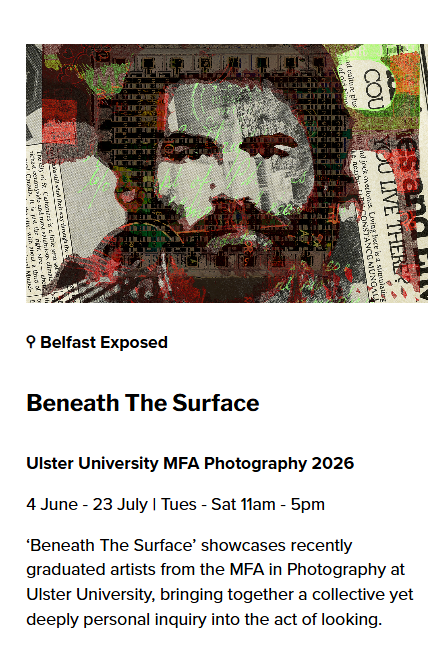
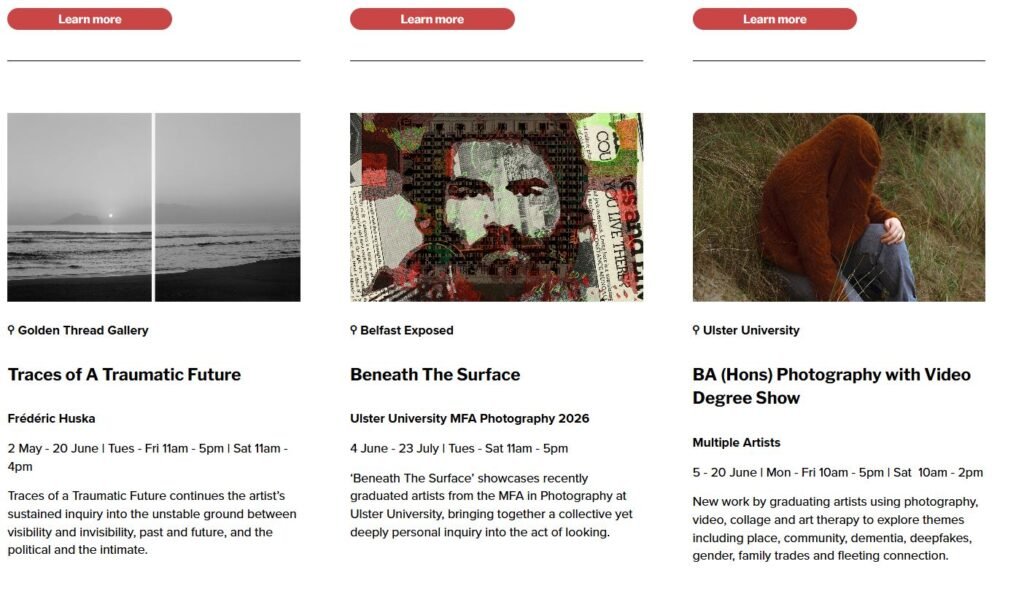
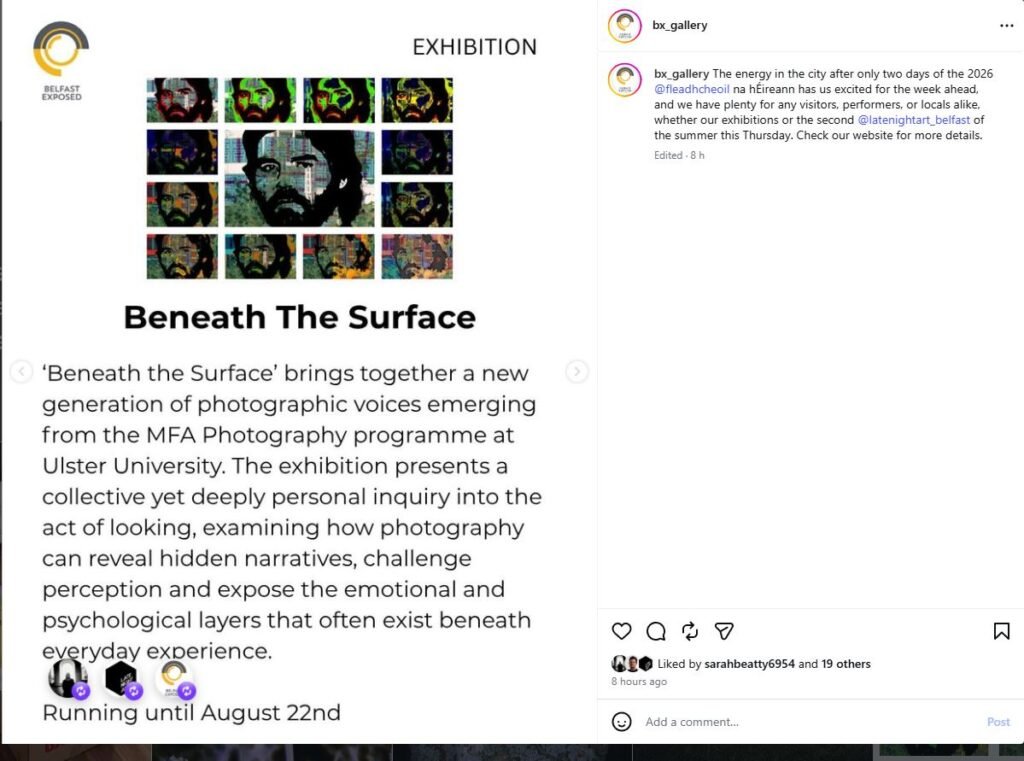
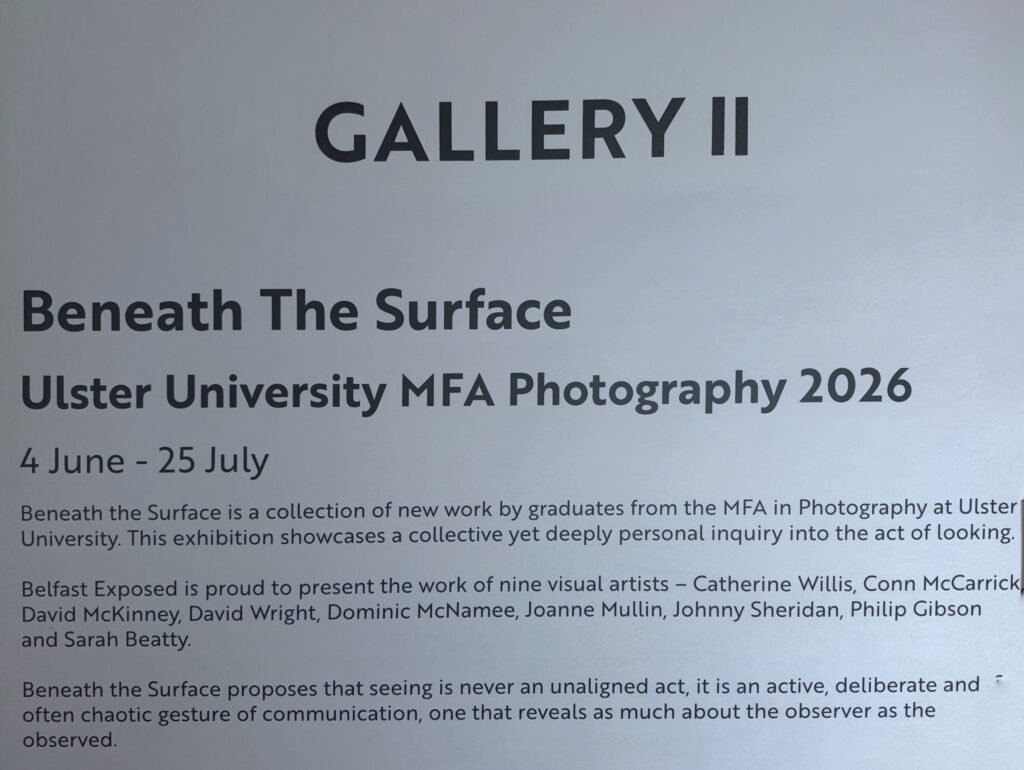
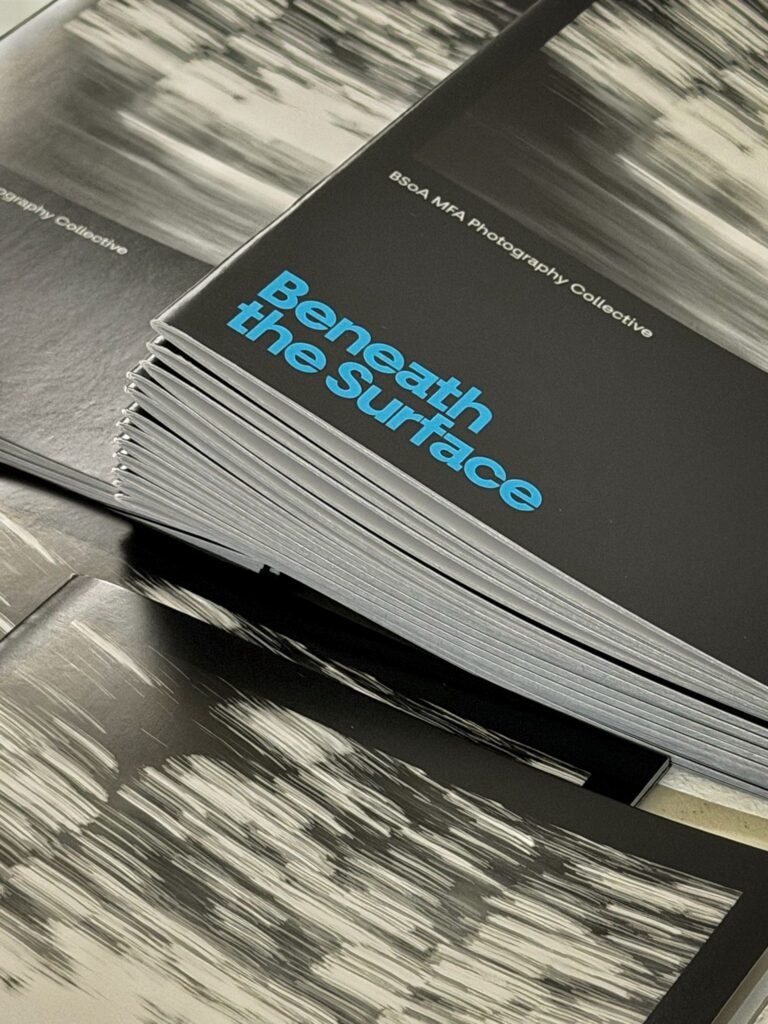
The opening night of the MFA Photography exhibition was held on 5th June 2026 and the exhibition was due to end on 25th July, but in fact went on until 25th August. More than 600 people viewed the opening night, part of Belfast’s Late Night Art, which takes place on the first Thursday of each month.
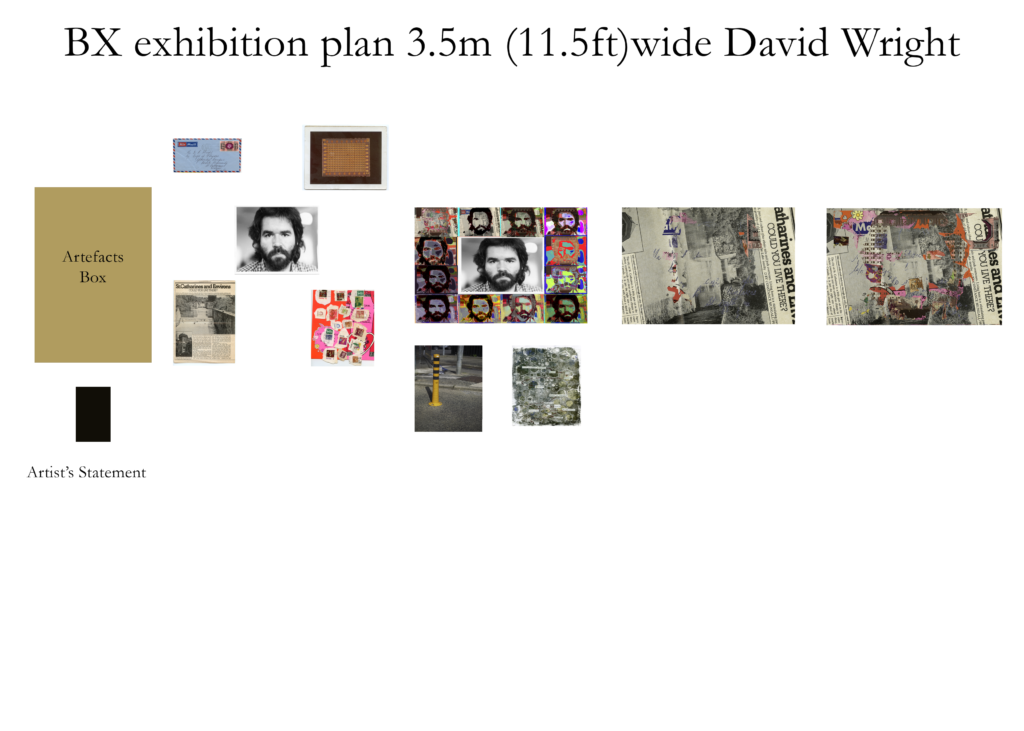
My Exhibits
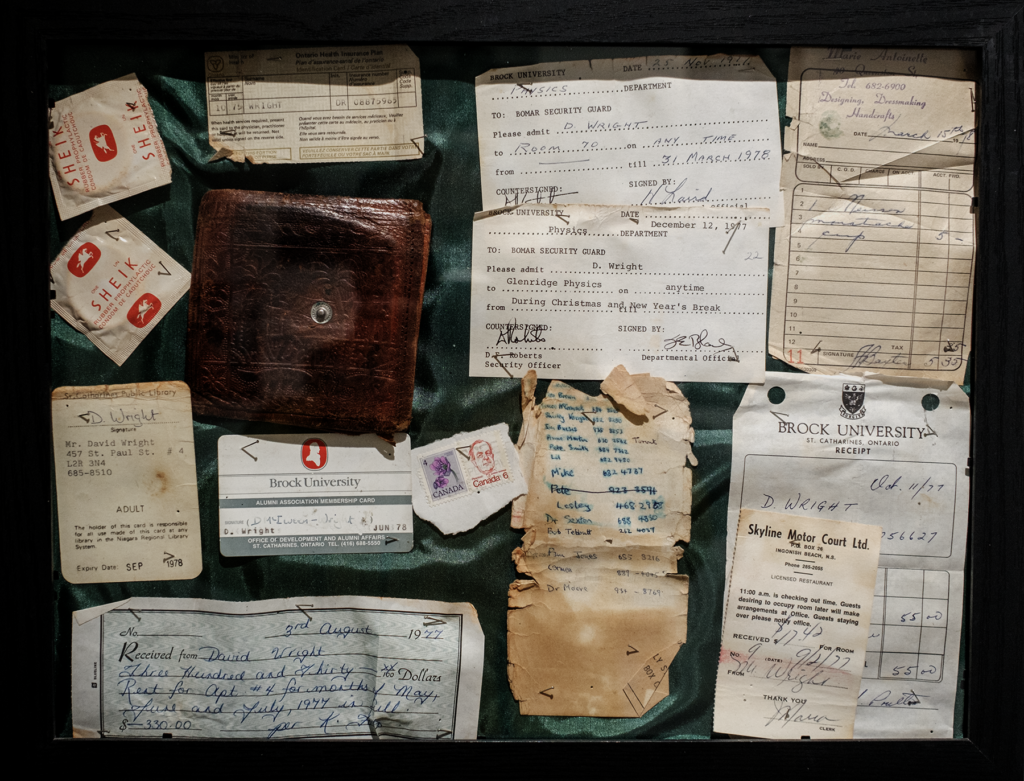
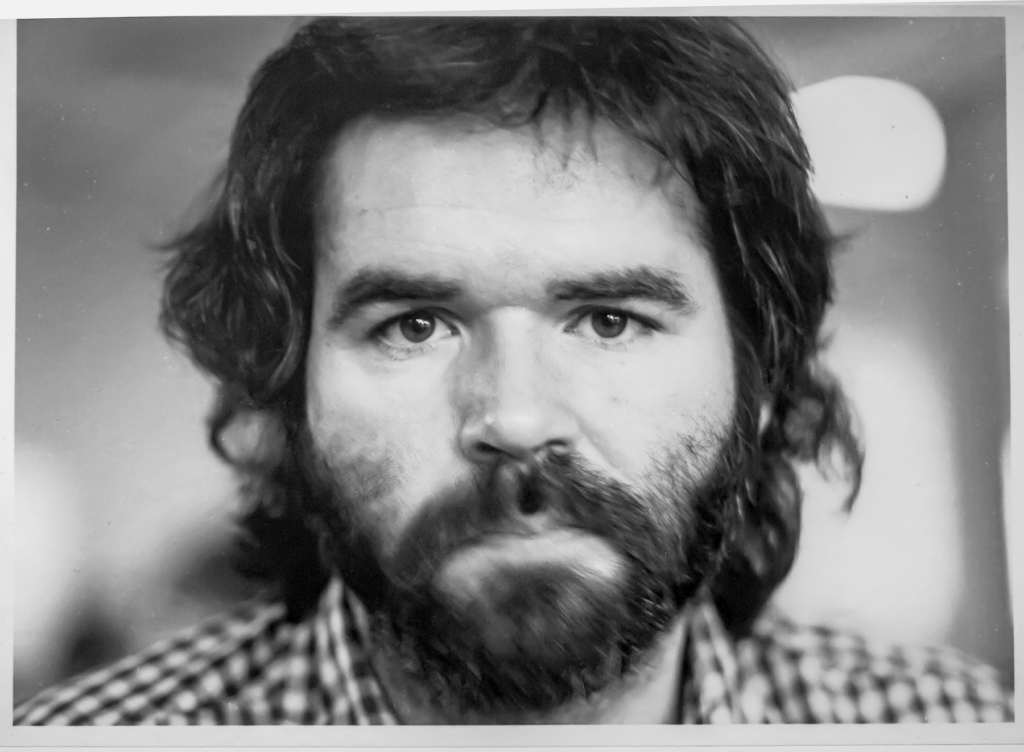
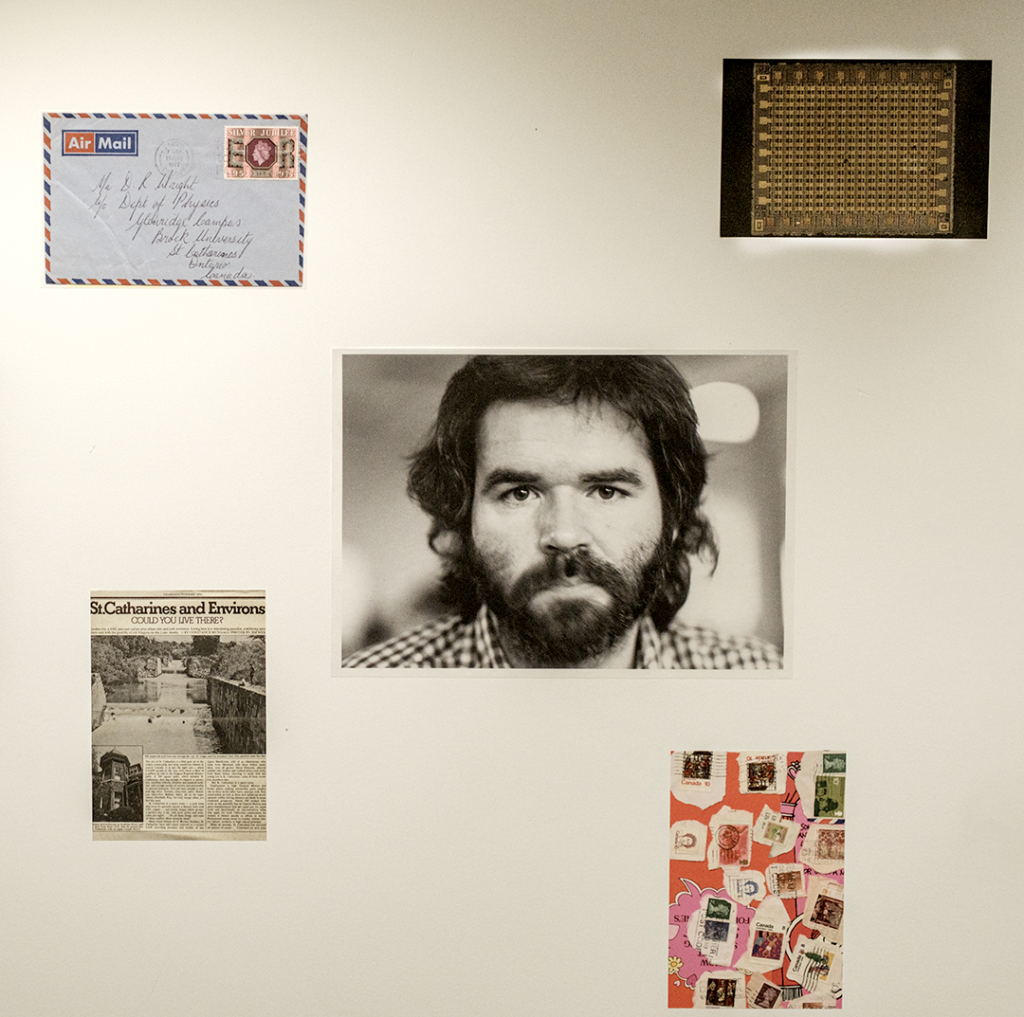
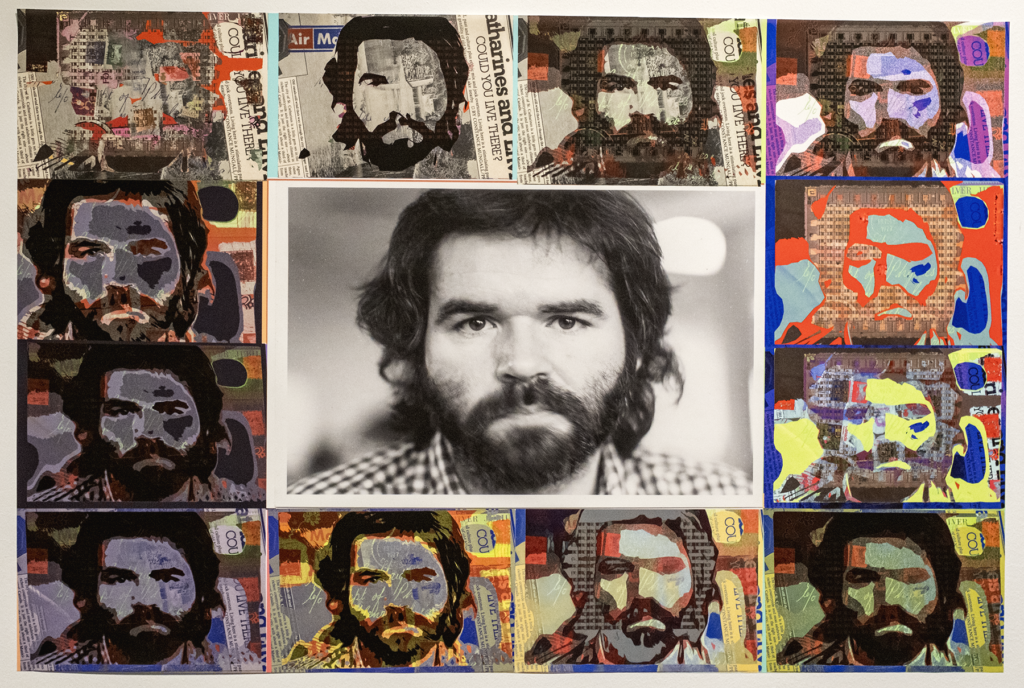
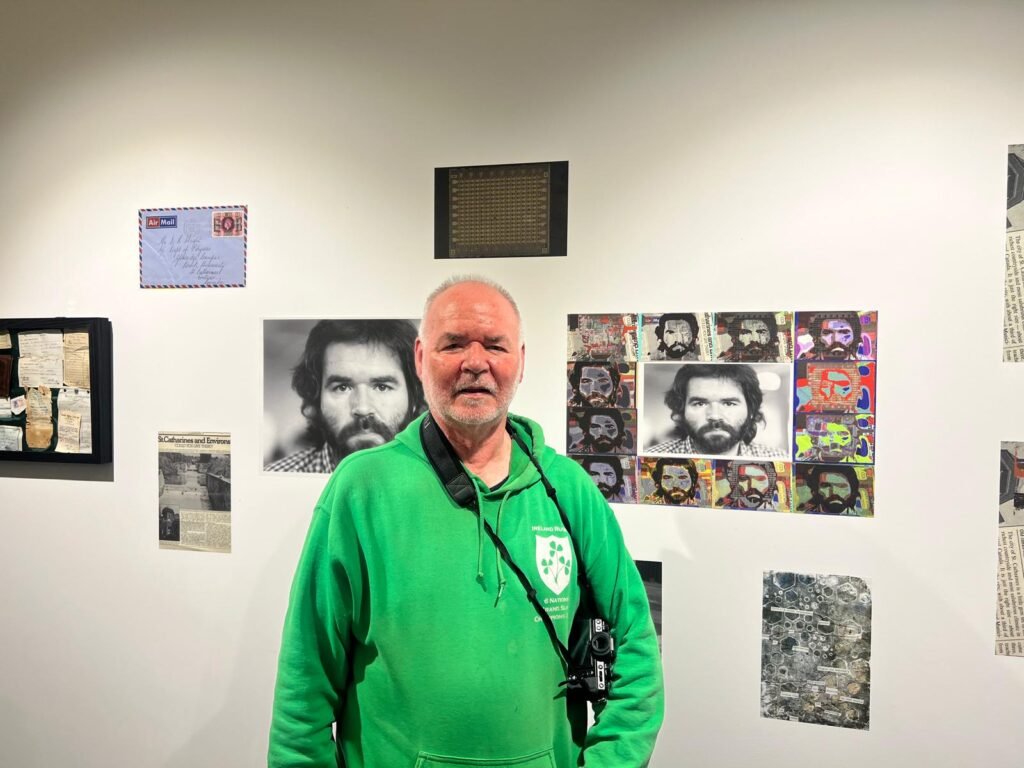
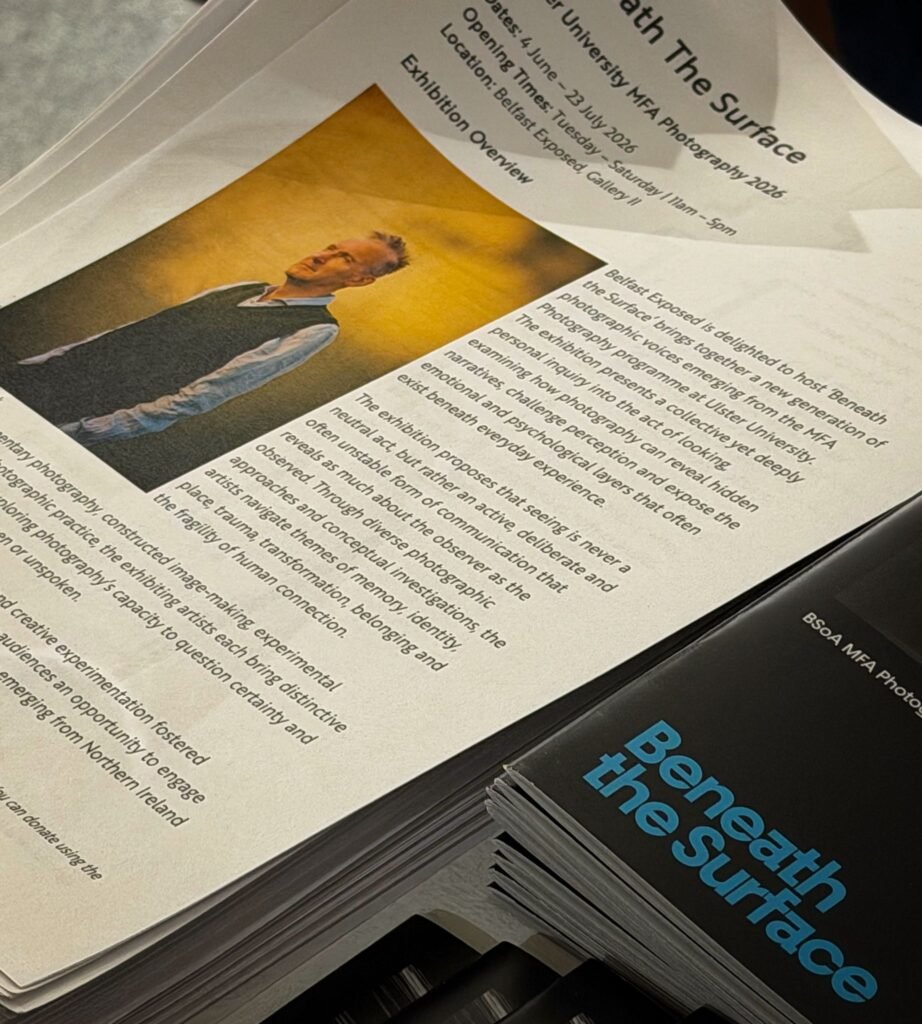
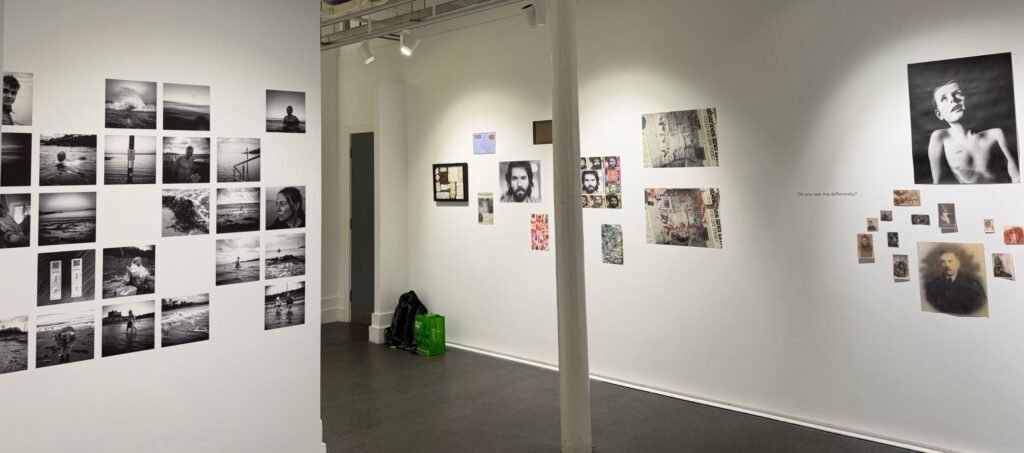
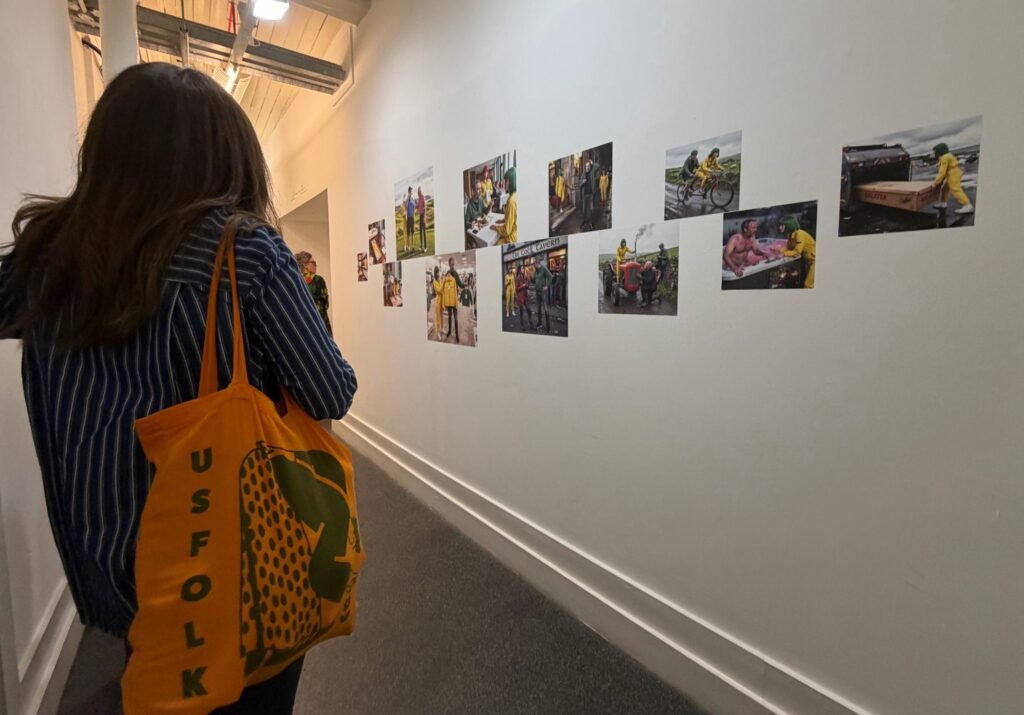
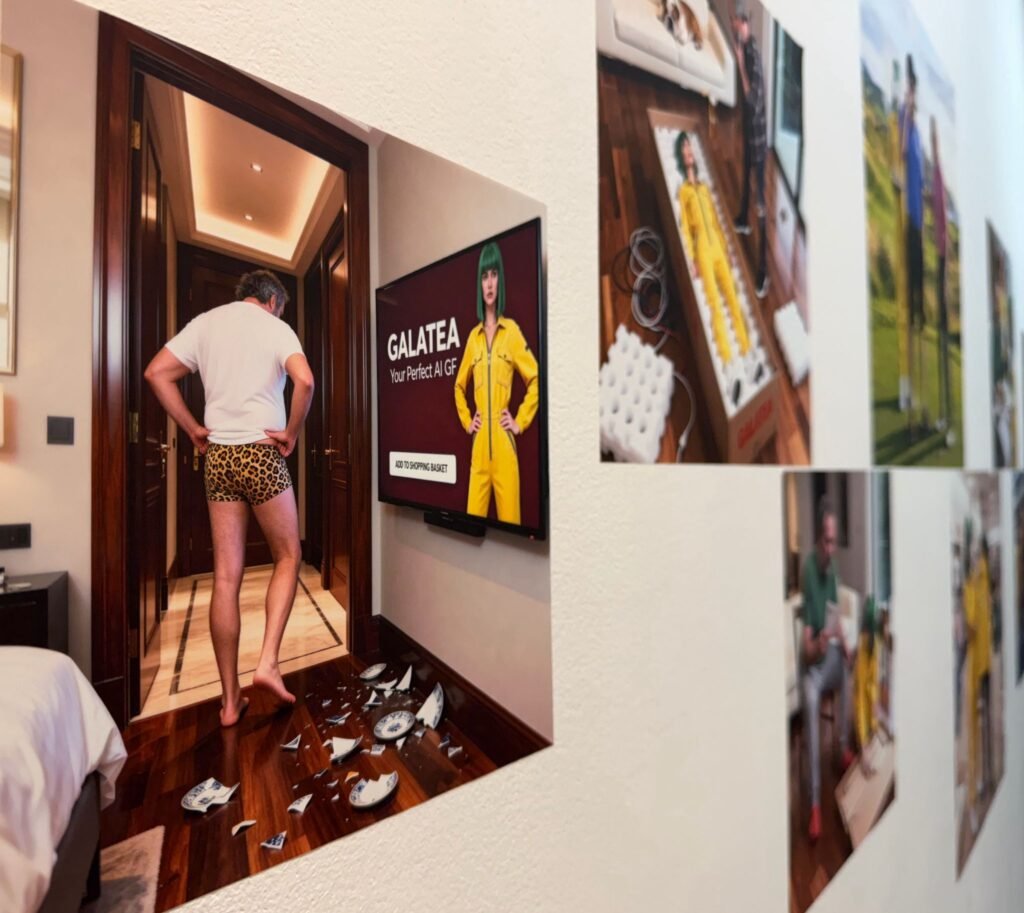
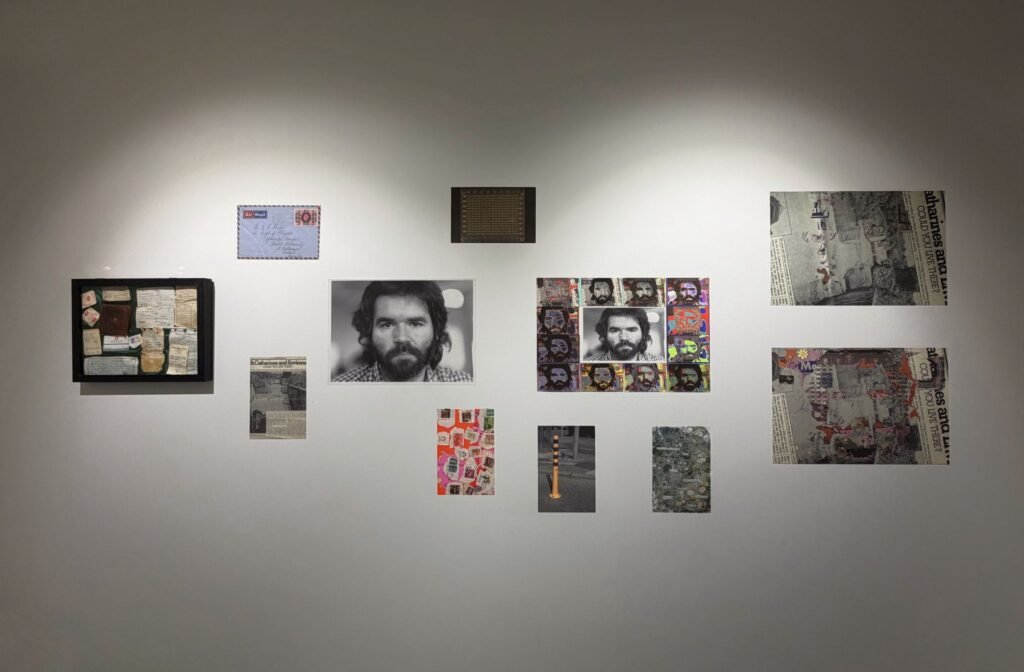
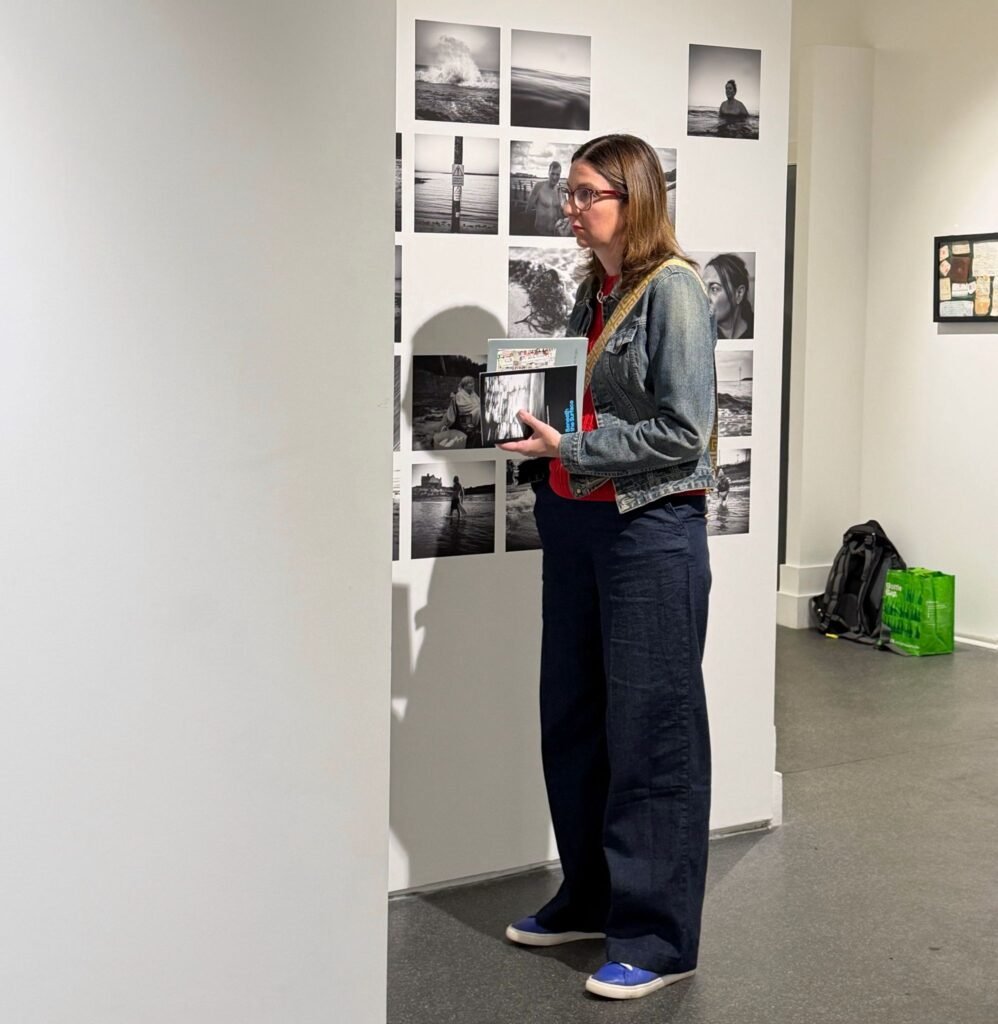
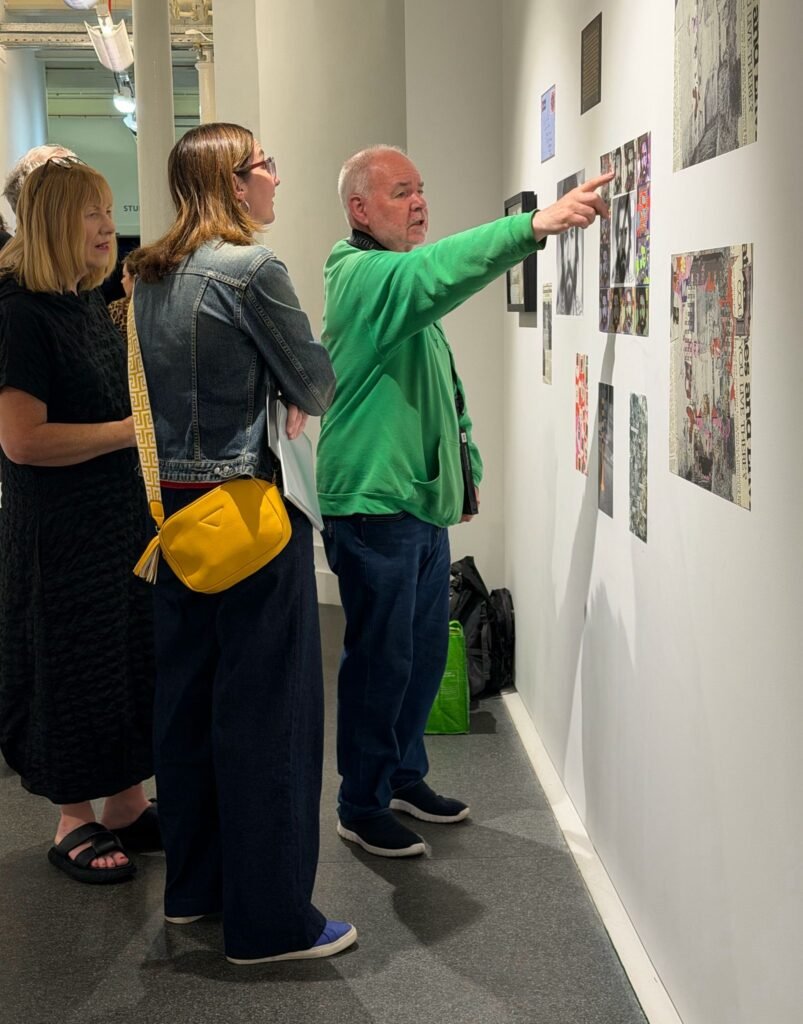
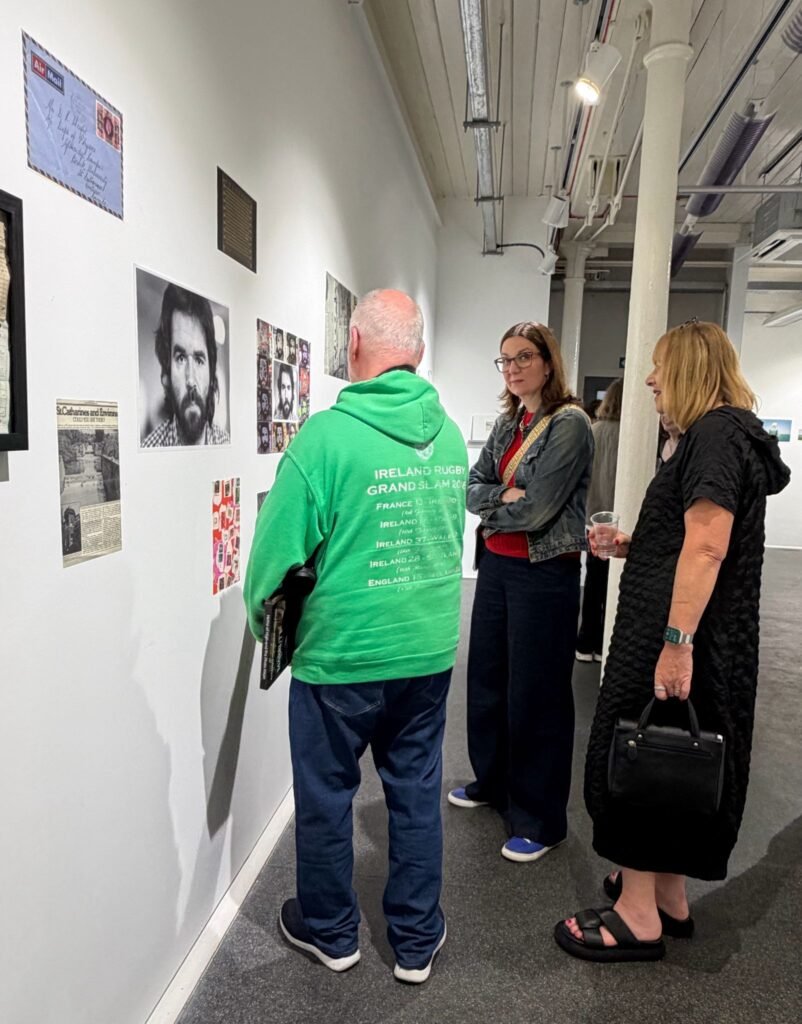
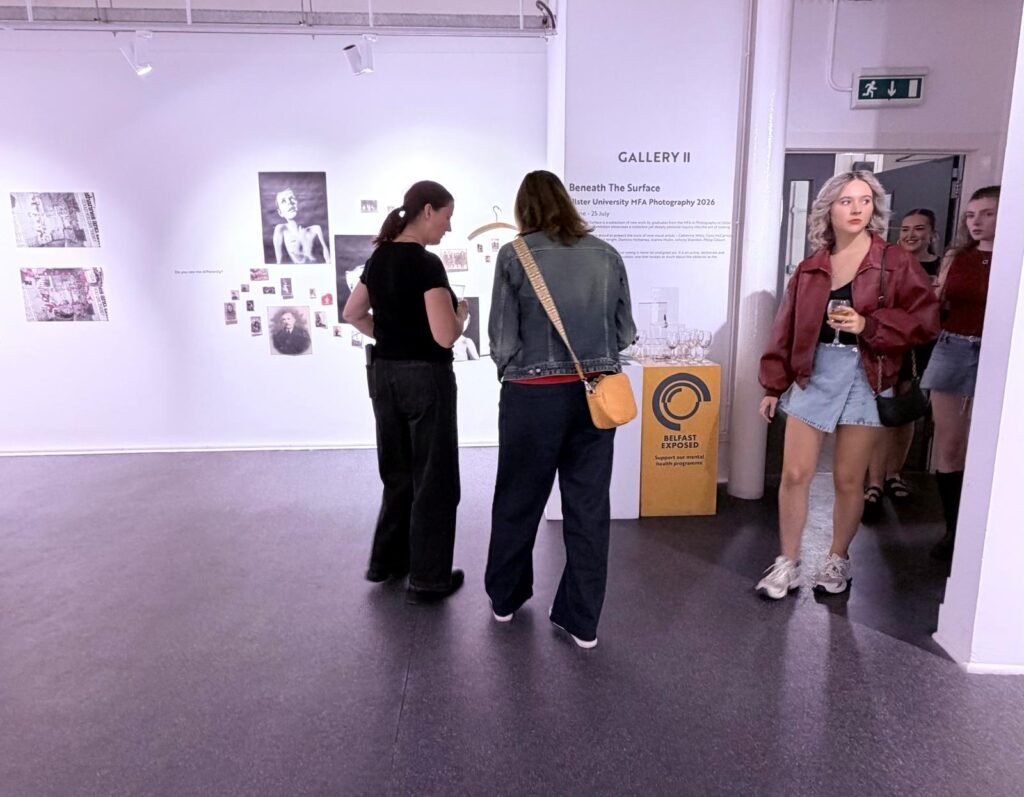
Photos in this gallery thanks to Julie MGovern.
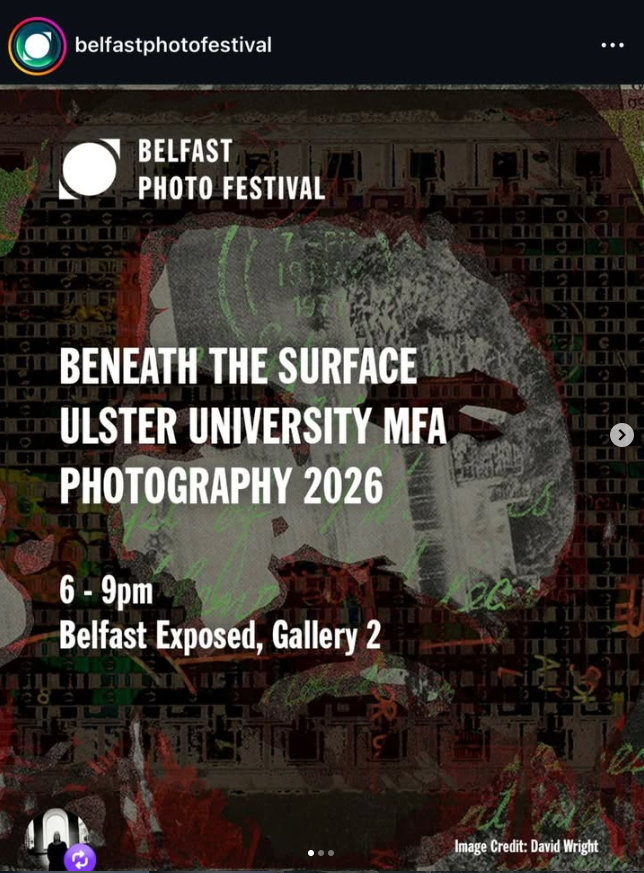
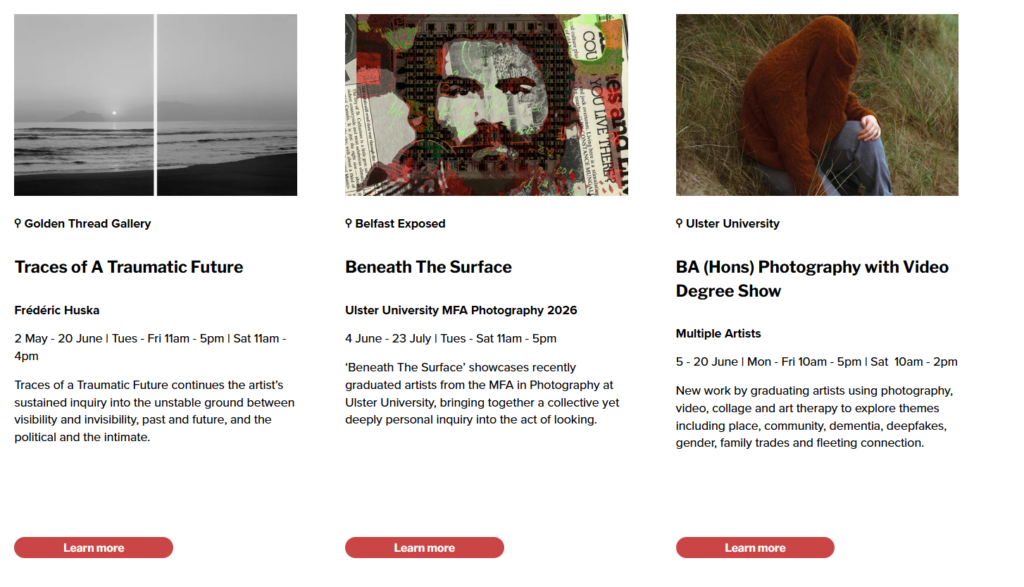
The controversy on Instagram
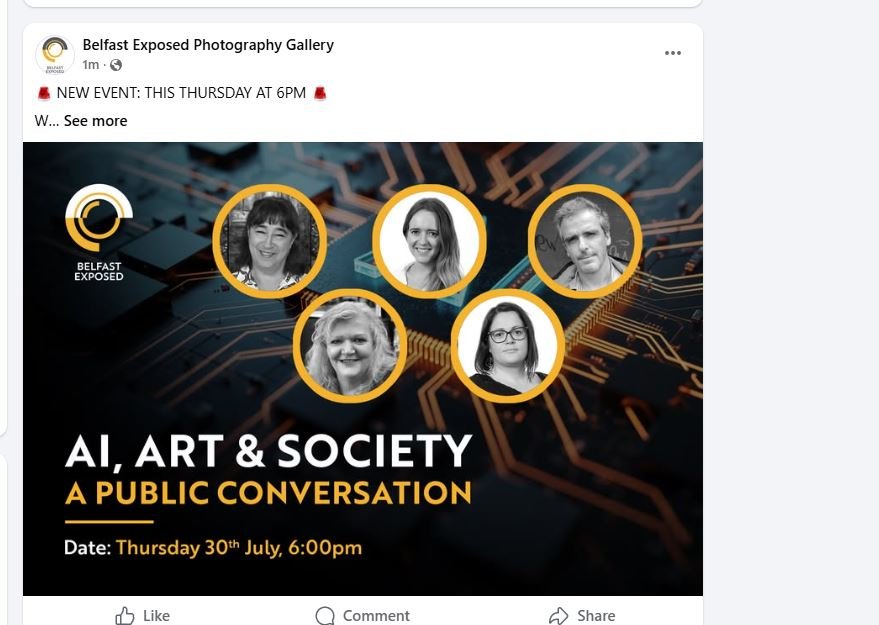
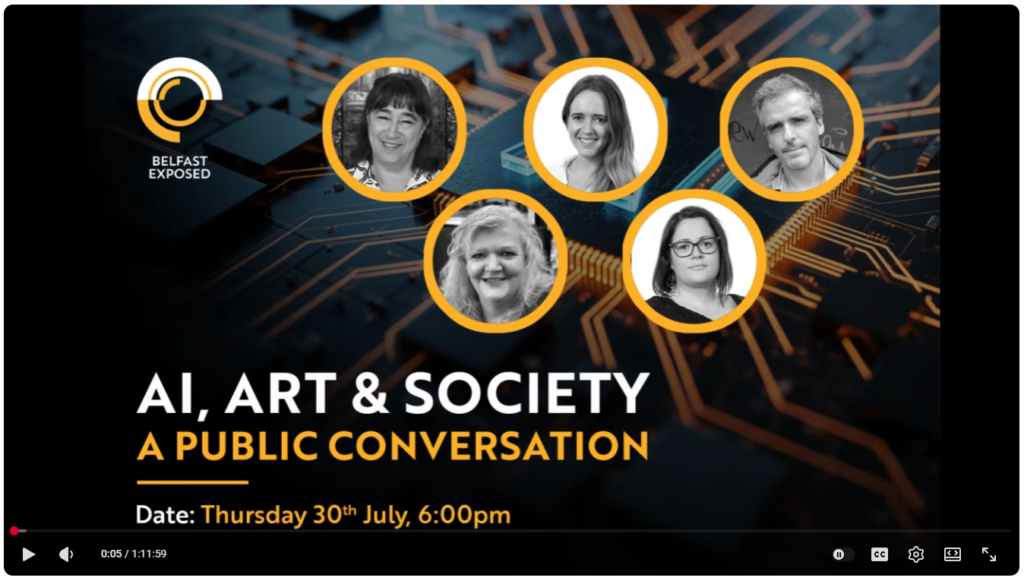
Belfast Exposed’s panel for the discussion.
The discussion of the use of AI in one of the exhibitor’s images
Opinion Piece in Belfast Telegraph
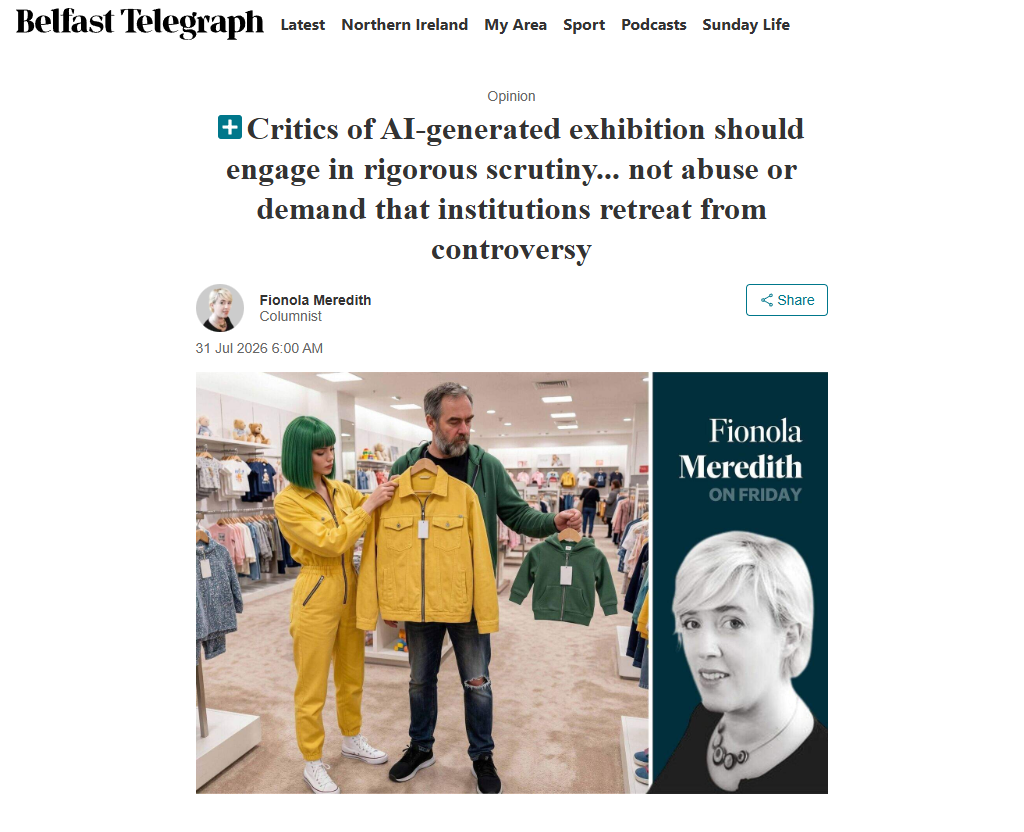
“Art is supposed to provoke. However, these days, provocation is too often answered not with argument, but with abuse.
The latest target is Galatea, a series of AI-generated images by Dublin photographer Johnny Sheridan, shown as part of Beneath the Surface, Belfast Exposed’s annual exhibition of work by graduates of Ulster University’s MFA photography programme.
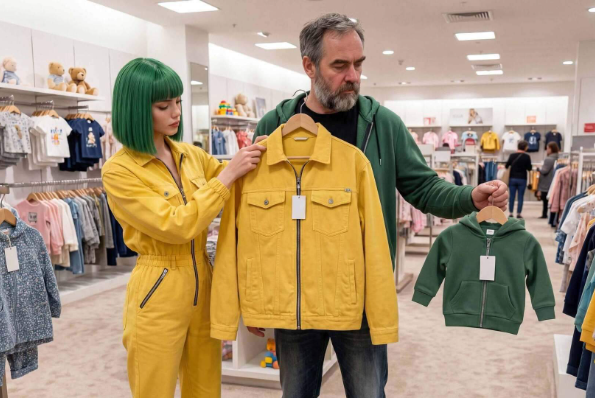
It depicts a failed near-future romance between an ordinary man and his compliant female robot. Drawing on the Greek myth of Pygmalion, Sheridan uses this fantasy of the perfect artificial girlfriend to explore misogyny, “manosphere” culture and the patriarchal assumptions embedded in algorithms.
Whether he succeeds is a perfectly legitimate subject for argument, but much of the online response has barely risen to the level of argument at all.
Belfast Exposed has been accused of promoting “AI slop”. The decision to show the work has been called “disgusting” and “vile”, while online campaigners have demanded its removal, a formal apology and even a boycott of the gallery. Sheridan’s talent, intelligence and integrity have all been attacked, sometimes in crudely personal terms.
You would think Belfast Exposed had announced that it was replacing every photographer in Northern Ireland with a laptop.
There are, of course, serious reasons for artists to be wary of generative AI. The systems have been trained on vast quantities of existing human work, often scraped from the internet without permission, attribution or payment. Artists quite reasonably fear for their livelihoods when commissioners can produce a cheap synthetic approximation of their style in seconds.
Nor is the objection simply economic. Art has traditionally offered an encounter with another human consciousness. A photograph tells us that somebody stood somewhere, looked at the world and chose to release the shutter at that moment.
Belfast photo gallery slammed over use of AI images: ‘AI steals without permission’
“Author Eric Reinhart argued that when an image is invented by a machine, this human act of transmission disappears. However technically accomplished the product, there is nobody home inside it: no body, memory, desire or lived experience reaching towards the viewer.
I feel the force of that argument. As a writer, I know that meaning lies not merely in the arrangement of words, but in the human experience carried through them. I do not want novels, paintings and photographs overwhelmed by frictionless, machine-generated substitutes.
But that does not settle the matter. A camera is also a machine. So are Photoshop and the digital editing tools routinely used by photographers. When photography first appeared, critics dismissed it as mechanical, soulless and unworthy of being called art. Some feared it would even destroy painting. And yet painting — and photography — have survived.
Photographer Craig Boehman said that what matters is expression and intention. AI can be used to manufacture a finished image from a simple instruction, but it can also become one element within a longer process involving selection, alteration, composition and editing.
Boehman supports copyright protection and regulation while continuing to use AI. His position may be rather messy, but then again, reality generally is.
Most importantly, Sheridan’s work is not pretending to be conventional photography. The artificiality is its subject. He is using generative technology to expose the fantasies and biases that generative technology reproduces.
That may strike some viewers as clever; others may find it facile or self-defeating. Perhaps using AI to criticise AI is like setting fire to a forest to draw attention to climate change. Or perhaps it resembles an artist turning the machinery of propaganda back upon itself.
Those are interesting questions. Shouting abuse at a gallery on social media is not an interesting way to respond.
Belfast Exposed organised a public discussion on the controversy. The event, which took place on Thursday evening, sold out, which hopefully suggests an appetite for something more substantial than mutual denunciation.
This is precisely what a serious cultural institution should do. A gallery is not merely a showroom for objects everyone has already agreed are beautiful, meaningful or morally acceptable. It is also a testing ground: somewhere that difficult or unsettling work can be examined, criticised and defended.
Nobody is obliged to like Galatea, or even to accept that wholly AI-generated images belong in a photography gallery. Belfast Exposed’s decision deserves rigorous scrutiny.
But exhibiting a contentious work is not an endorsement of every technology involved in making it. It is an invitation to think for ourselves.
The proper answer to art we dislike is not abuse or demands that institutions retreat from controversy. It is lively, informed engagement and debate.
Belfast Exposed has provided a space for that debate. The least we can do is enter it with our minds switched on.”
And down it came
On Tuesday 25th August the exhibition finally came to an end, and yesterday (27th) I took down my exhibits. Fortunately I came in to BX in the morning as the painter was already nearly finished preparing the walls in the lower gallery for the next exhibition and was about to come upstairs to our exhibition space in the afternoon. We hadn’t been told this was happening on this day.
I wanted to take down my exhibits myself as one exhibit was a glass-fronted display of artefacts and the rest were images printed on vinyl and I had kept their backings so I could save the images for re-use and the £121 I paid for the printing wasn’t wasted.